

 Current location:
 Publish Time:
2026-03-18
Publish Time:
2026-03-18 Views:124
When choosing a Freeze-Dried Powder OEM manufacturer, it is necessary to conduct a comprehensive evaluation across core dimensions such as technical strength, production capacity, compliance, and service support to ensure product quality, supply chain stability, and market competitiveness. The following are the key elements and specific considerations:
I. Technical Strength and R&D Capabilities
Maturity of Freeze-Drying Process
Equipment Advancement: Check if the manufacturer is equipped with international brand freeze-dryers (e.g., GEA from Germany, SP Scientific from the USA) to ensure low-temperature control precision (±0.5°C) and vacuum stability (<10Pa), preventing the inactivation of active ingredients.
Process Parameter Optimization: Request the manufacturer to provide freeze-drying curves for typical products (e.g., pre-freezing temperature, sublimation rate, desorption temperature) to verify their ability to adjust processes according to different ingredients (e.g., probiotics, peptides) and reduce collapse rates (<5%).
Innovative Technologies: Pay attention to whether the manufacturer masters transdermal absorption technologies (e.g., nano-encapsulation) or cold-extraction processes (low-temperature extraction of plant actives) to enhance product efficacy differentiation.
Formula R&D Capability
Customization Services: The manufacturer should be able to design formulas based on brand needs (e.g., anti-aging, repair) and provide stability test reports (e.g., no separation after 72 hours at 40°C).
Ingredient Compatibility: Verify if the manufacturer can resolve compatibility issues for high-concentration ingredients (e.g., Blue Copper Peptide and EDTA) to avoid precipitation or discoloration.
Efficacy Validation: Require the manufacturer to provide third-party test reports (e.g., SGS, Intertek) to prove the products have the claimed effects (e.g., whitening, 20% increase in hydration rate).
II. Production Capacity and Quality Control
Capacity and Delivery Cycle
Large-scale Production: Confirm the manufacturer's daily capacity (e.g., 100,000 bottles/day) to see if it can meet peak season demand and avoid stockout risks.
Flexible Production: Evaluate if the manufacturer supports small-batch customization (e.g., MOQ of 5,000 bottles) and rapid line switching (e.g., formula switch within 3 days) to adapt to fast market iterations.
Delivery Lead Time: Clarify the standard cycle from order to delivery (e.g., 15-30 days) and agree on penalty clauses for delays.
Quality Management System
Certification Qualifications: Prioritize manufacturers that have passed ISO22716 (Cosmetic GMP), GMPC (Good Manufacturing Practice for Cosmetics), and ISO9001 (Quality Management System) certifications.
Clean Workshops: Check if the production environment meets the Class 100,000 cleanroom standard (e.g., dust particle count ≤ 3.5 million/m³) to prevent microbial contamination.
Online Detection: Confirm whether the manufacturer is equipped with real-time monitoring equipment (e.g., particle size analyzers, moisture meters) for spot checks on key indicators (e.g., live bacteria count, pH value) for each batch.
III. Compliance and Risk Control
Regulatory Compliance Capability
Domestic Filing Support: The manufacturer must be familiar with the "Cosmetic Supervision and Administration Regulation" and be able to assist in completing general cosmetic filings or special cosmetic registrations (e.g., whitening, sunscreen products).
International Certifications: For export products, confirm if the manufacturer has qualifications such as EU EC No 1223/2009 or US FDA registration to avoid customs clearance risks.
Label Compliance: Check if the manufacturer can provide compliant label designs (e.g., ingredient list order, warning labels) to avoid penalties from market regulators.
Intellectual Property Protection
Non-Disclosure Agreement: Require the manufacturer to sign an NDA to prevent formula leakage.
Patent Support: Prioritize manufacturers with independent patent technologies (e.g., freeze-drying protective agent formulas) to enhance product competitiveness.
Trademark Registration Assistance: Some manufacturers provide trademark inquiry and registration services to help brands avoid infringement risks.
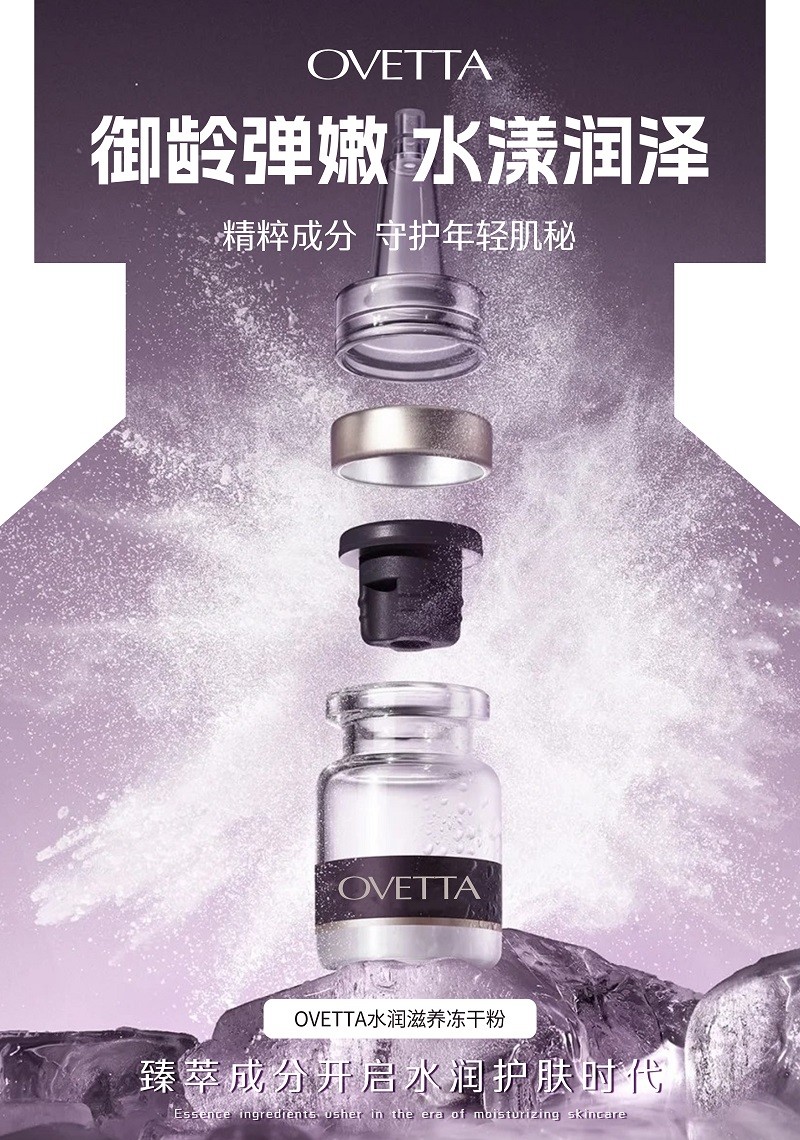
IV. Service Support and Cost Optimization
One-Stop Service Capability
Packaging Design: Manufacturers should provide bottle type and label design services, and support customized packaging (e.g., irregular bottles, eco-friendly materials).
Logistics and Distribution: Confirm if the manufacturer cooperates with third-party logistics to provide cold chain transportation (e.g., probiotic freeze-dried powder requires storage at 2-8°C) or moisture-proof packaging.
After-sales Support: Require the manufacturer to provide product stability tracking services (e.g., regular testing of active ingredient content within 12 months) and assist in handling customer complaints (e.g., allergy or spoilage issues).
Cost Control and Flexibility
Minimum Order Quantity (MOQ): Choose an appropriate MOQ based on brand size (e.g., 5,000 bottles for startup brands, while mature brands can request over 100,000 bottles for tiered pricing).
Raw Material Procurement: Prioritize manufacturers collaborating with large raw material suppliers (e.g., BASF, DSM) to reduce material costs (e.g., hyaluronic acid procurement prices can be 10%-15% lower).
Payment Methods: Negotiate flexible payment terms (e.g., 30% down payment + 70% cash on delivery) to reduce brand capital pressure.
V. Industry Reputation and Case Validation
Customer Cases
Request a list of cooperative brands from the manufacturer (e.g., well-known domestic brands, cross-border hits) and verify if they are long-term partners (e.g., cooperation for over 3 years).
Check if the manufacturer has served leading brands in niche fields (e.g., medical-grade freeze-dried powder, maternal and child-specific products) to verify professionalism.
Market Feedback
Search for manufacturer reviews via industry forums and social media (e.g., Xiaohongshu, Douyin), focusing on dimensions such as product quality, delivery lead time, and after-sales service.
Contact existing customers of the manufacturer to learn about their cooperation experience (e.g., communication efficiency, problem-solving speed).
VI. On-site Inspection and Auditing
Factory Tour
Focus on checking the hygiene status of the freeze-drying workshop, laboratory, and warehouse, and confirm if equipment is running normally (e.g., check for frosting or leakage in freeze-dryers).
Observe whether the production process is standardized (e.g., whether employees wear sterile clothing, and whether raw materials are stored in separate zones).
Third-party Audit
Commission a third-party organization (e.g., SGS, TÜV) to audit the manufacturer and issue a quality management system evaluation report to reduce cooperation risks.
(Some materials on this website are sourced from the internet. If the information displayed on this website infringes upon the intellectual property or other legal rights of any media or individual, please notify us immediately, and we will delete it promptly.)
