

 Current location:
 Publish Time:
2026-03-18
Publish Time:
2026-03-18 Views:115
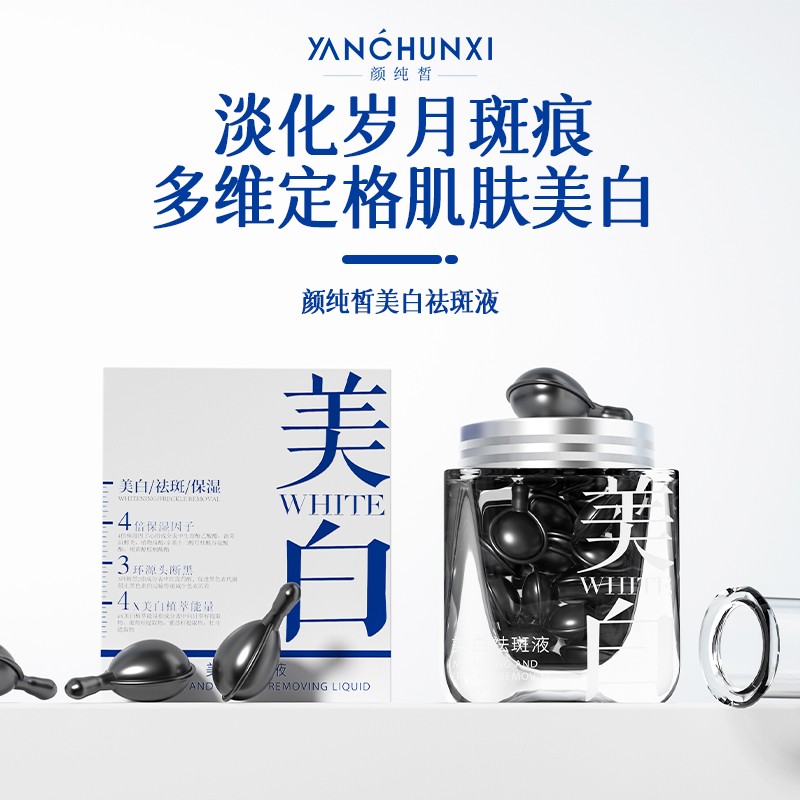
Single-dose Essence OEM/ODM provides brand owners with full-chain support from production to market launch. Its core advantages lie in reducing operating costs, enhancing product competitiveness, and accelerating market response, while achieving asset-light operations through the technology and resources of professional manufacturers. The following is a detailed analysis of the benefits:
I. Cost Optimization: Reducing Capital and Resource Investment
Reduction in Fixed Asset Investment
Brand owners do not need to build their own sterile production lines (the unit price of B.F.S. equipment exceeds 10 million RMB), clean workshops (Class 10,000 standard renovation costs approximately 2,000 RMB/㎡), or laboratories, saving tens of millions in initial investment.
Case: A startup brand can redirect funds originally intended for factory construction toward marketing through contract manufacturing, quickly seizing market share.
Scale Procurement to Lower Costs
OEM factories maintain long-term cooperation with raw material suppliers (such as BASF and DSM), allowing for bulk purchasing of high-activity ingredients (e.g., Pro-Xylane, Blue Copper Peptide), which reduces raw material costs by 10%-20%.
When packaging material procurement reaches the million-unit level, the unit price can be compressed by 30%-50% (e.g., soft tube unit price dropping from 0.8 RMB to 0.4 RMB).
Flexible Control of Inventory Risk
Supporting small-batch customization (e.g., starting from 5,000 units) avoids inventory backlog caused by market forecasting errors (traditional bottled essence MOQs are usually over 30,000 bottles).
Data: Single-dose packaging is lightweight (unit weight <5g), reducing warehousing costs by 60% compared to traditional bottled packaging.
II. Technical Empowerment: Enhancing Core Product Competitiveness
Professional Formula R&D Capability
OEM factories possess senior formulator teams capable of developing customized formulas for different skin types (e.g., sensitive, oily/acne-prone) and efficacies (anti-aging, repair).
Case: A "4D Hyaluronic Acid Single-dose Essence" developed by an OEM factory for a brand achieved deep hydration through molecular weight ratios, with monthly sales exceeding 100,000 units after launch.
Advanced Production Processes to Guarantee Activity
Utilizing B.F.S. aseptic filling technology with zero human contact reduces microbial contamination risk by 90% and increases active ingredient preservation to over 85% (compared to only 40% in traditional bottling).
Nitrogen-filling technology (nitrogen purity ≥99.999%) isolates oxygen, extending the product shelf life to 24 months.
Stability Testing and Efficacy Validation
OEM factories provide stability validation such as high temperature (40°C/72h), low temperature (-15°C/24h), and cycle tests (25°C→40°C→-15°C for 3 cycles) to ensure no separation or discoloration.
Collaboration with third-party institutions (e.g., SGS) for human efficacy tests (e.g., 28-day wrinkle reduction rate, transepidermal water loss rate) provides data support for product claims.
III. Efficiency Improvement: Accelerating Product Launch Cycles
Shortening Time from R&D to Mass Production
Professional OEM factories have mature formula libraries (e.g., repair, whitening, anti-aging series). Brand owners can directly select or fine-tune them, compressing the R&D cycle from 6-12 months to 1-3 months.
Process Comparison:
Self-built Factory: Site selection → Renovation → Equipment debugging → Personnel training → Trial production (approx. 12-18 months).
OEM/ODM: Contract signing → Formula confirmation → Packaging design → Production (approx. 1-3 months).
Flexible Production to Address Market Changes
OEM factories support rapid line switching (e.g., formula switch within 3 days) and small-batch replenishment to adapt to short-term demand fluctuations such as live-streaming sales and holiday promotions.
One-stop Service Reduces Communication Costs
From formula R&D, production, and packaging design to logistics distribution, OEM factories provide full-chain services. Brand owners only need to interface with one project manager, improving efficiency by over 50%.
Service Content:
Packaging Design: Providing bottle type, label, and outer box customization solutions.
Logistics: Supporting cold chain transportation (e.g., probiotic single-dose units requiring storage at 2-8°C).
After-sales Support: Handling customer complaints (e.g., allergies, leakage) and assisting in recalls.
IV. Risk Control: Lowering Compliance and Operational Risks
Regulatory Adherence and Qualification Assurance
OEM factories are familiar with domestic and international regulations (e.g., China's "Cosmetic Supervision and Administration Regulation", EU EC No 1223/2009), assisting in filing, registration, and label audits to avoid legal risks.
Qualification Coverage: Certifications such as ISO22716 (Cosmetic GMP), GMPC, ISO9001, and FDA registration ensure products meet market access requirements.
Shared Quality Responsibility Mechanism
Signing clear quality agreements to define responsibilities for raw material inspection, production process monitoring, and finished product sampling, thereby reducing quality risks for the brand owner.
Rapid Iteration Based on Market Feedback
OEM factories help brands optimize formulas (e.g., adjusting viscosity or fragrance) or packaging (e.g., improving tear-off design) through sales data (e.g., repurchase rates, negative review keywords), enhancing product competitiveness.
Data-driven: One brand adjusted the capacity of its single-dose essence from 1ml to 1.5ml based on user review analysis provided by the OEM factory, resulting in a 30% sales increase.
V. Brand Value Addition: Focusing on Core Capability Building
Asset-light Operation Model
By outsourcing the production phase, brand owners can concentrate resources on core businesses such as market research, brand marketing, and channel expansion, improving overall operational efficiency.
Leveraging OEM Factory Resource Endorsement
Cooperating with well-known OEM factories (e.g., NBC, Cosmax) can enhance consumer trust in product quality, which is particularly suitable for startup brands to quickly establish a reputation.
Data: Consumer trust in brands that "supply international big-name brands via their OEM factories" increases by 40%.
Flexible Product Line Expansion
OEM factories support multi-category contract manufacturing (e.g., single-dose masks, single-dose ampoules), allowing brand owners to quickly test new categories and reduce the cost of trial and error.
(Some materials on this website are sourced from the internet. If the information displayed on this website infringes upon the intellectual property or other legal rights of any media or individual, please notify us immediately, and we will delete it promptly.)
